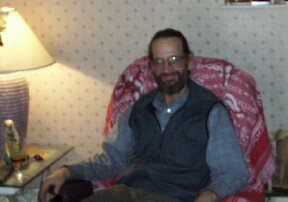
First of all, I am happy to see a tradition that has been carried on by the Libertarian Party activists for thirty-three years has finally caught on. The "Tea Parties" that are being organized across the nation today, are proof that people are finally waking up to the fact that We The People have been under an Elitist yoke since the beginning of the twentieth century. It is time for us to take our government back. What follows here is my personal protest message:
Dear Mr President and Congress:
Yes, you can put me in a box, but I would rather you didn't. I do not fit into a box. I have my own wants and needs, and I do not believe what is good for me is good for everybody else, nor do I believe that what is right for everybody else is necessarily right for me.
Yes, you can make the people dependent on the government, but I would rather you didn't. A government can only do so much for its people before it becomes a tyranny.
Yes, you can "help" the poor, but I would rather you didn't. I make less than $10,000 a year, so I may be considered one of the "poor" you are trying to "help." So far, to help me, you have imposed an excise tax that has bullied me into giving up one of the few comforts I had left. I realize that smoking tobacco is not good for me, but it should be my decision to quit, not the government's. Hot dogs aren't good for me either, nor is sugar, margarine, or coffee, but it is my choice as to how much of that I consume, or stop consuming, not the government's.
Yes, I receive food stamps, and I am grateful for that, in my time of need, but I feel I have earned that after paying taxes for nearly forty years. However, the most effective way of helping the "poor" is through local charitable organizations, and you are trying to take that away by eliminating tax deductions for charitable gifts.
Since you try to justify government sponsored population reduction with the explanation "The fewer of them (the poor) there are, the less money it will cost us in the long run," I do not feel the government is looking out for my best interests.
Yes, you can limit available jobs by requiring outrageous wages, but I would rather you didn't. Your "economic recovery package" to the states requires that contractors to your infrastructure projects pay a minimum wage of union scale reduces the number of jobs you could have created by 1/3. Your stimulus package does not create more jobs, it creates fewer jobs.
Yes, you can impose a government "of the government, by the government, and of the government," but I would rather you didn't. A government that does not trust the people can not be trusted. A government that imposes it's idea of what is right for all is a government that tries to control every aspect of our individual lives. No government that governs for the sake of governing is a friend of the people.
Yes, you can give our money to dictators who will use it to build more prisons to silence its dissidents, but I would rather you didn't. That practice has been proven, time after time, to create enemies from the people who are being oppressed.
Yes, you can try to silence me, but I will not be silenced. You have spoken your piece, and I will speak mine. The First Amendment gives me that right.
Yes, you can, but so can We The People.
Showing posts with label Bill of Rights. Show all posts
Showing posts with label Bill of Rights. Show all posts
Wednesday, April 15, 2009


Tuesday, November 06, 2007
The Atrocity at Home

You're driving down the highway, and, up ahead you see flashing red and blue lights. The traffic slows to a standstill, and you wait in line, wondering if there are prison escapees or other criminal fugitives in the area. When you finally get to the roadblock, a man with a badge and a gun approaches your window, and says "Show me your license and registration, please."
As you collect the required documents the "public safety" officer takes a visual look around inside your car, and you realize that it is you they are looking for.
What, you may wonder, is the reason for this detention and search? Where is the probable cause?
The government charges that the probable cause is that you are driving a car, and that you might, therefore, be driving while intoxicated, under the influence, or that you may be using or transporting illegal or illicit substances in the passenger compartment of your vehicle.
Of course, the government may find probable cause in everything you do. If you are walking down the street, you may be eluding arrest, because, if you have nothing to hide, why aren't you driving a car? If you are living by yourself, you could be a social deviant. If you are living and breathing, you might plotting to kill someone. There is plenty of probable cause, when the criteria are so vague.
In the states--all but eleven--that utilize these sobriety check points, the ratio of actual DWI offenders to innocent detainees is approximately less than one in 800, according to Barry Noreen of the Colorado Springs Gazette.
Noreen comments on the questionable constitutionality of sobriety check points:
In 1990, the Supreme Court ruled that sobriety checkpoints are constitutional, and that remains the law of the land, even though the Fourth Amendment supposedly protects citizens from being detained without probable cause.
Is it conceivable the high court could be wrong? Remember, a unanimous court once upheld the internment camps for Americans of Japanese ancestry. In Plessy v. Ferguson, it created the “separate-but-equal” justification for racial segregation.
Sure, the Supreme Court could be wrong again.
In 1990, the court defended checkpoints where the average delay for innocent citizens was 25 seconds. Today, the Colorado Springs Police Department’s Web site says three minutes is an acceptable guideline.
It’s hardly reassuring that the Bill of Rights will be suspended for just three minutes.
The return to the State harvested from the sobriety check points is too low to justify the cost in time and money. Law enforcement resources are being mishandled in manning these check points.
Wouldn't it be easier to catch DWI offenders by patrolling traffic and looking for such tell-tale signs as excessive weaving, erratic turns, speeding, excessively slow driving, or running stop lights or stop signs? Just because a person is in a car, doesn't mean that he or she is irresponsible for his or her actions, any more than living and breathing means that we could commit a crime.
Monday, December 18, 2006
Bill of Rights 215th Anniversary
This is three days late, because the 215th anniversary of the Bill of Rights was last Friday. Just for a refresher
Here is the Bill of Rights, and a chart including four major factions in American Politics, and which articles each faction recognize or acknowledge:
Click on the chart to view full size.

The Bill of Rights
1.Congress shall make no law respecting an establishment of religion, or prohibiting the free exercise thereof, or abridging the freedom of speech, or of the pres; or the right of the people peaceably to assemble and to petition the Government for a redress of grievances.
2. A well regulated Militia, being necessary to the security of a free State, the right of the people to keep and bear Arms, shall not be infringed
3. No Soldier shall, in time of peace be quartered in any house, without the consent of the Owner, nor in the time of war, but in a manner to be prescribed by law.
4. The right of the people to be secure in their persons, houses, papers, and personal effects, against unreasonable searches and seizures, shall not be violated and no Warrants shall issue, but upon probable cause, supported by Oath or affirmation, and particularly describing the place to be searched, and the persons or things to be seized.
5. No person shall be held to answer for a capital, or otherwise infamous crime, unless on presentment or indictment of a Grand Jury, except in cases arising in land or naval forces, or in the Militia, when in actual service in time of War or public danger; nor shall any person be subject for the same offense to be twice put in jeopardy of life or limb; nor shall be compelled in any criminal case to be a witness against himself; nor be deprived of life, liberty, or property, without due process of law; nor shall private property be taken for public use, without just compensation.
6.In all criminal prosecutions, the accused shall enjoy the right to a speedy and public trial, by an impartial jury of the State and district; whereas the crime shall have been committed, which district shall have been previously ascertained by law; and to be informed of the nature and cause of the accusation; to be confronted with the witnesses against him; to have compulsory process for obtaining witnesses in his favor; and to have Assistance of Counsel for his defense.
7. In suits at common law, where the value in controversy shall exceed twenty dollars, the right of trial by jury shall be preserved, and no fact tried by jury, shall be otherwise re-examined in any Court of the United States, than according to the rules of the common law.
8. Excessive bail shall not be required, nor excessive fines imposed, nor cruel and unusual punishments inflicted.
9. The enumeration in the Constitution, of certain rights, shall not be construed to deny or disparage others retained by the people.
10. The powers not delegated to the United States by the Constitution, not prohibited by it to the States, are reserved to the States respectively, or to the people.
Here is the Bill of Rights, and a chart including four major factions in American Politics, and which articles each faction recognize or acknowledge:
Click on the chart to view full size.

The Bill of Rights
1.Congress shall make no law respecting an establishment of religion, or prohibiting the free exercise thereof, or abridging the freedom of speech, or of the pres; or the right of the people peaceably to assemble and to petition the Government for a redress of grievances.
2. A well regulated Militia, being necessary to the security of a free State, the right of the people to keep and bear Arms, shall not be infringed
3. No Soldier shall, in time of peace be quartered in any house, without the consent of the Owner, nor in the time of war, but in a manner to be prescribed by law.
4. The right of the people to be secure in their persons, houses, papers, and personal effects, against unreasonable searches and seizures, shall not be violated and no Warrants shall issue, but upon probable cause, supported by Oath or affirmation, and particularly describing the place to be searched, and the persons or things to be seized.
5. No person shall be held to answer for a capital, or otherwise infamous crime, unless on presentment or indictment of a Grand Jury, except in cases arising in land or naval forces, or in the Militia, when in actual service in time of War or public danger; nor shall any person be subject for the same offense to be twice put in jeopardy of life or limb; nor shall be compelled in any criminal case to be a witness against himself; nor be deprived of life, liberty, or property, without due process of law; nor shall private property be taken for public use, without just compensation.
6.In all criminal prosecutions, the accused shall enjoy the right to a speedy and public trial, by an impartial jury of the State and district; whereas the crime shall have been committed, which district shall have been previously ascertained by law; and to be informed of the nature and cause of the accusation; to be confronted with the witnesses against him; to have compulsory process for obtaining witnesses in his favor; and to have Assistance of Counsel for his defense.
7. In suits at common law, where the value in controversy shall exceed twenty dollars, the right of trial by jury shall be preserved, and no fact tried by jury, shall be otherwise re-examined in any Court of the United States, than according to the rules of the common law.
8. Excessive bail shall not be required, nor excessive fines imposed, nor cruel and unusual punishments inflicted.
9. The enumeration in the Constitution, of certain rights, shall not be construed to deny or disparage others retained by the people.
10. The powers not delegated to the United States by the Constitution, not prohibited by it to the States, are reserved to the States respectively, or to the people.
Subscribe to:
Posts (Atom)